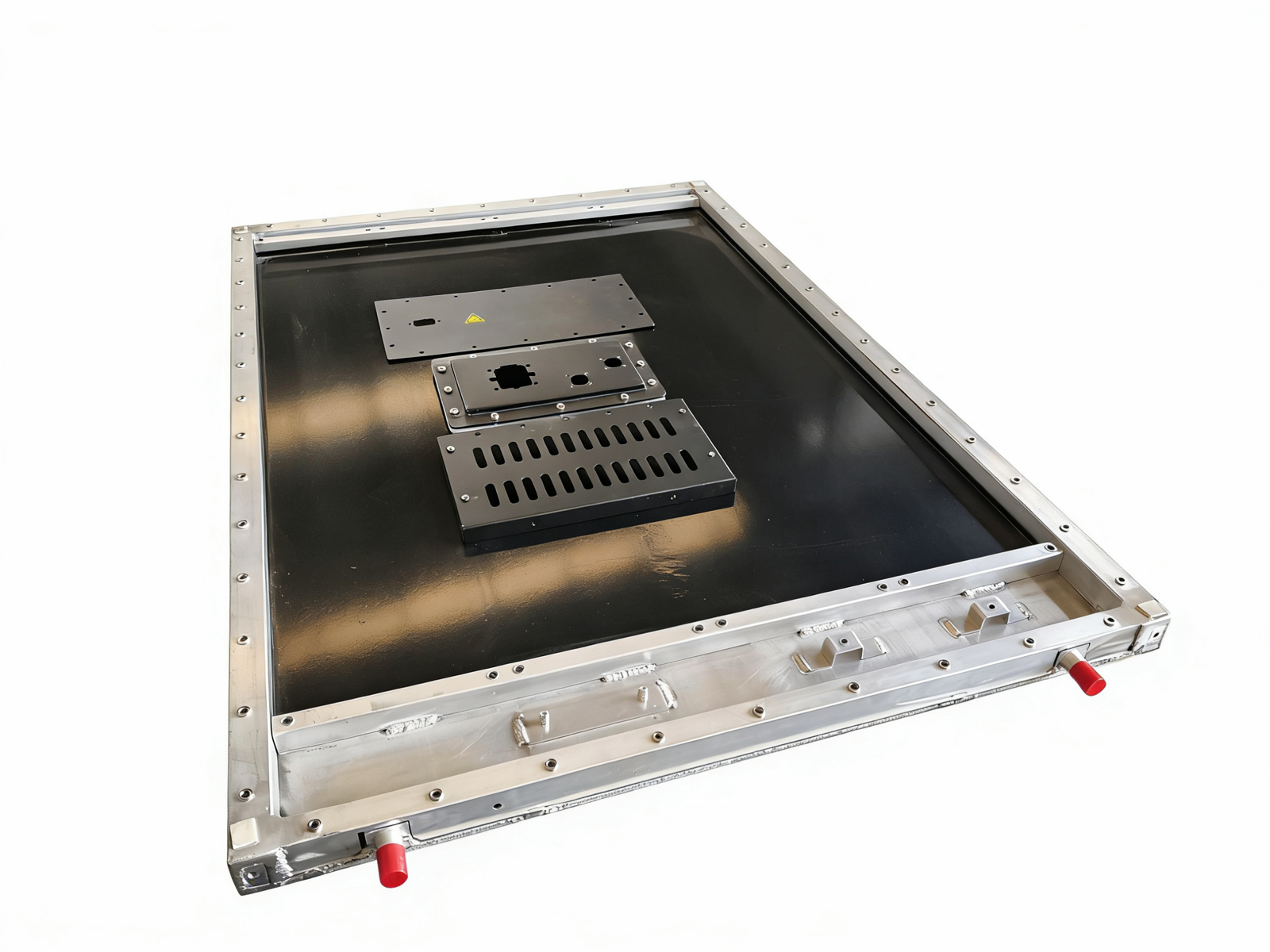
If you're sourcing battery cold plates, liquid-cooled enclosures, or any thermal-management component for a commercial EV that will see road use, IATF 16949:2016 is non-negotiable. Some procurement teams treat this as a tick-box — "vendor has the certificate, move on." That misses what the standard actually means and how it affects the parts you'll receive over a 5-year program.
This is a practical guide to what IATF actually requires, why OEMs mandate it, and what to look for beyond the certificate itself.
What IATF 16949 actually is
IATF 16949:2016 is the global automotive sector quality management standard. It was developed by the International Automotive Task Force — a group representing major OEMs (BMW, Daimler, FCA, Ford, GM, PSA, Renault, VW) and trade associations. It supersedes the older ISO/TS 16949 and is now the only automotive QMS recognized globally.
IATF builds on ISO 9001:2015 but adds automotive-specific requirements that materially affect production. Key additions:
•Mandatory PPAP (Production Part Approval Process) for any change to the part, process, or supplier
•Statistical process control (SPC) for key characteristics, with documented Cpk targets
•Failure mode and effects analysis (PFMEA / DFMEA) for every part and process
•Specific traceability requirements down to lot or serial number
•Customer-specific requirements integrated into the QMS (each major OEM has its own "CSR" overlay)
•8D corrective action methodology with closure within defined intervals
A vendor that has IATF certification has demonstrated, via third-party audit, that they actually do all of this — not just have a manual that says they do.
Why OEMs mandate it
For parts that go on a vehicle that carries people or cargo on public roads, three things have to be true at scale:
1. The parts have to perform to spec on Day 1 of every unit shipped.
2. They have to perform to spec for the warranty period (usually 8 years for traction batteries).
3. When something goes wrong, the failure has to be traceable to a specific batch, machine, parameter set, and operator — so it can be contained and corrected.
IATF 16949 is the framework that operationalizes these three requirements. Without it, an OEM has no defensible position when a regulator asks why a vehicle defect happened. With it, the OEM has documented evidence that the supplier ran a process designed to prevent the defect, that the defect mode was identified in PFMEA, that controls were in place, and that any escape can be traced to root cause.
This is why every Tier-1 program from any major commercial vehicle OEM mandates IATF for any safety-related part. Battery thermal management is safety-related — coolant leakage into a battery enclosure can trigger thermal runaway.
The audit process
IATF certification works on a 3-year cycle:
•Year 0: initial certification audit. Full review of QMS, processes, records, customer-specific requirements.
•Year 1 and 2: annual surveillance audits. Targeted review of high-risk areas, sampling of records.
•Year 3: re-certification audit. Full review again.
Audits are unannounced for surveillance and last 5–10 person-days depending on plant size. Auditors come from accredited certification bodies — TÜV Rheinland, SGS, Bureau Veritas, DNV, BSI being the major ones.
The meaningful output is the audit findings. "Zero non-conformities" means no major issues found. "Major non-conformity" can suspend certification until corrected. "Minor non-conformities" must be closed within 90 days.
A vendor with zero non-conformities for 3+ consecutive years is materially different from one that just got certified or has a history of minor non-conformities.
Common reasons suppliers fail
From auditor reports across multiple battery component vendors over the last 5 years, the failure modes cluster:
•Inconsistent traceability — paper records that don't match digital, or batches missing parameter logs.
•Incomplete PFMEA — failure modes documented but no controls implemented for high-RPN items.
•Out-of-control SPC — Cpk on key characteristics below 1.33 with no corrective action.
•Supplier-of-supplier gaps — IATF requires sub-tier suppliers to be qualified; many cold-plate vendors source raw aluminum or fittings from non-qualified sources and can't show the qualification chain.
•Unauthorized changes — process or material changes made without PPAP submission. The most common audit finding.
When you're sourcing, asking specifically about these failure modes is more diagnostic than asking "are you IATF certified?"
What to verify beyond the certificate
A certificate hangs on every certified vendor's wall. To distinguish vendors, ask:
1. Show me your last 3 audit reports
Reputable vendors will share the summary findings (not the full report — that contains confidential customer info). You're looking for: zero major non-conformities, ideally zero minors, audit body name and date.
2. Show me a current PFMEA for a part similar to mine
A real PFMEA shows failure modes, severity/occurrence/detection ratings, controls in place, and RPN trend over time. A vendor that hands you a PFMEA template with empty fields hasn't actually implemented one.
3. Show me your Cpk data for the key characteristic relevant to my part
For cold plates, the key characteristic is usually pressure drop or leak rate. You want Cpk >1.33, ideally >1.67 with a trend chart over 12+ months. Vendors that say "we run SPC" but can't produce charts are not actually running SPC.
4. Walk me through your traceability for one specific lot
Pick a recent lot number and ask the vendor to walk you through it: which raw material lot, which machine, which operator, which parameters, which test results, which final destination. If they can't do this in 15 minutes, traceability is theater, not real.
5. What's your CSR matrix for [your OEM's parent group]?
IATF customer-specific requirements vary by OEM. A vendor that has been working with VW, GM, Daimler, etc., maintains a CSR matrix mapping IATF clauses to specific customer requirements. A vendor that doesn't know what CSR means hasn't been audited against any major OEM's specific overlay.
What this looks like in practice for cold plate vendors
For battery cold plate vendors specifically, the IATF requirements that matter most:
•Leak-rate Cpk above 1.33 with documented trend
•100% in-line leak test at production-relevant pressure (5+ bar)
•Per-batch traceability tied to FSW or braze parameters
•PFMEA covering at minimum: leak failure, joint fatigue, dimensional drift, contamination
•Sub-tier qualification for aluminum sheet supplier (mill cert traceability)
•PPAP submission for any process or material change
•8D closure within OEM-mandated intervals (typically 30-90 days)
Vendors that have all of this running have, in practice, far better field reliability than vendors that hold the certificate but cut corners.
Keyuan's IATF position
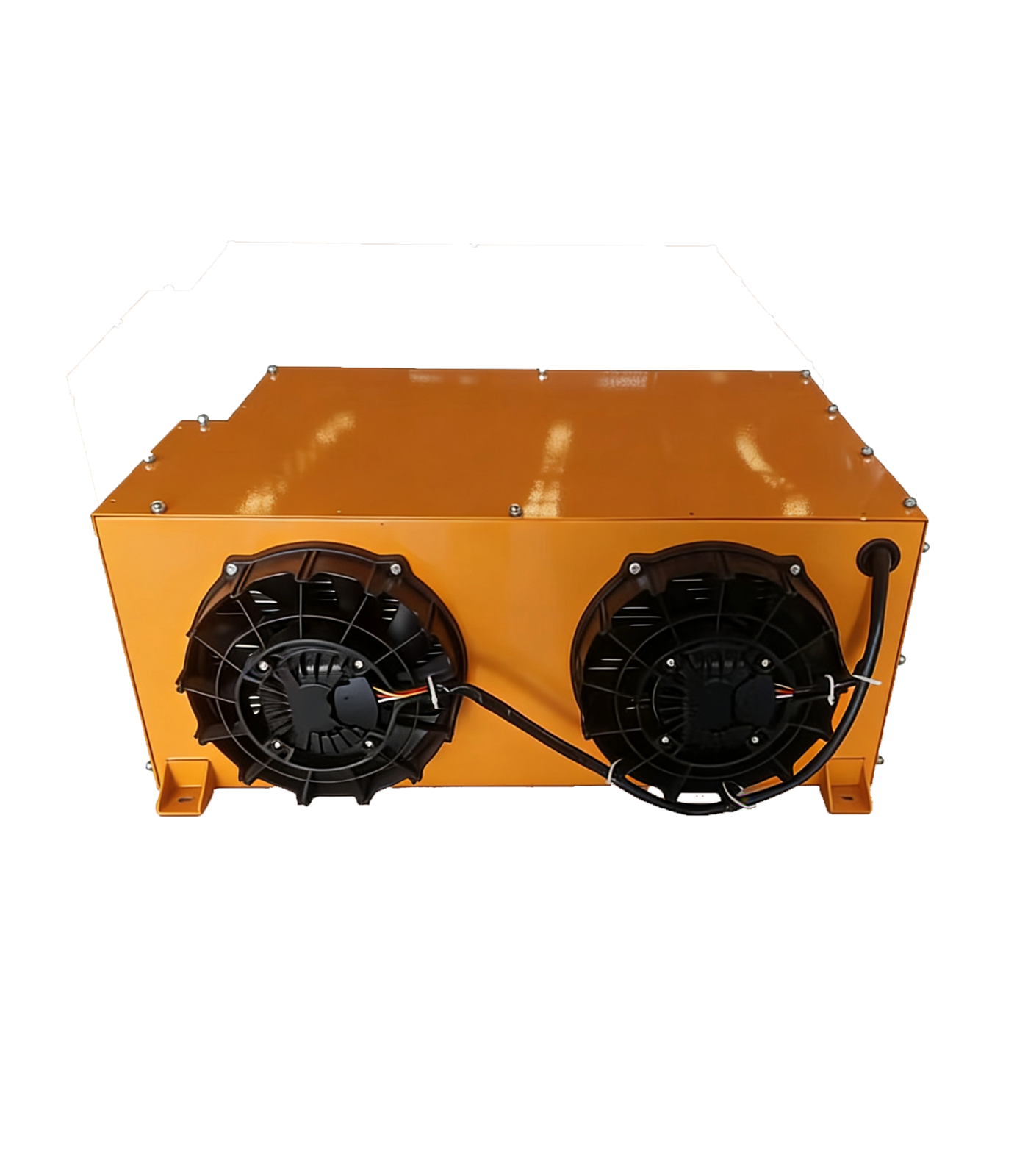
Keyuan has held IATF 16949:2016 for 5 consecutive years with zero non-conformities, certified by TÜV Rheinland. The certification covers our full battery cold plate, liquid-cooled enclosure, and cooling unit production at the Anqiu, Shandong facility.
We're happy to share — for any active sourcing conversation — our last 3 audit summary findings, current PFMEA for representative cold plate parts, leak-rate Cpk data over the last 24 months, traceability walkthrough for any production lot, and our CSR matrix for major OEM customers.
If you're qualifying a new battery thermal management supplier and want to do this kind of deep due diligence — that's exactly the conversation we want to have.