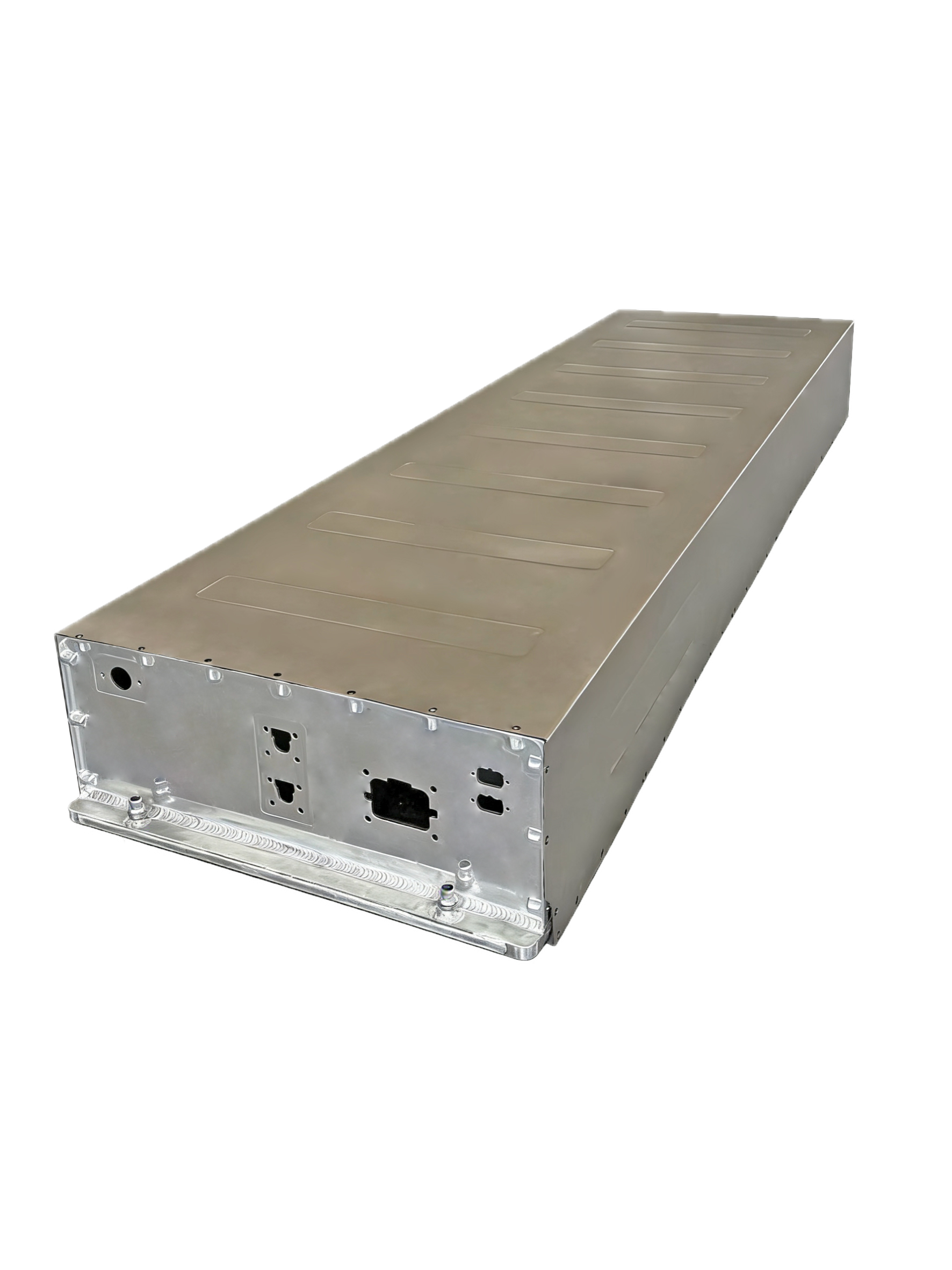
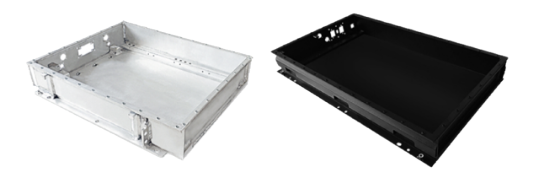
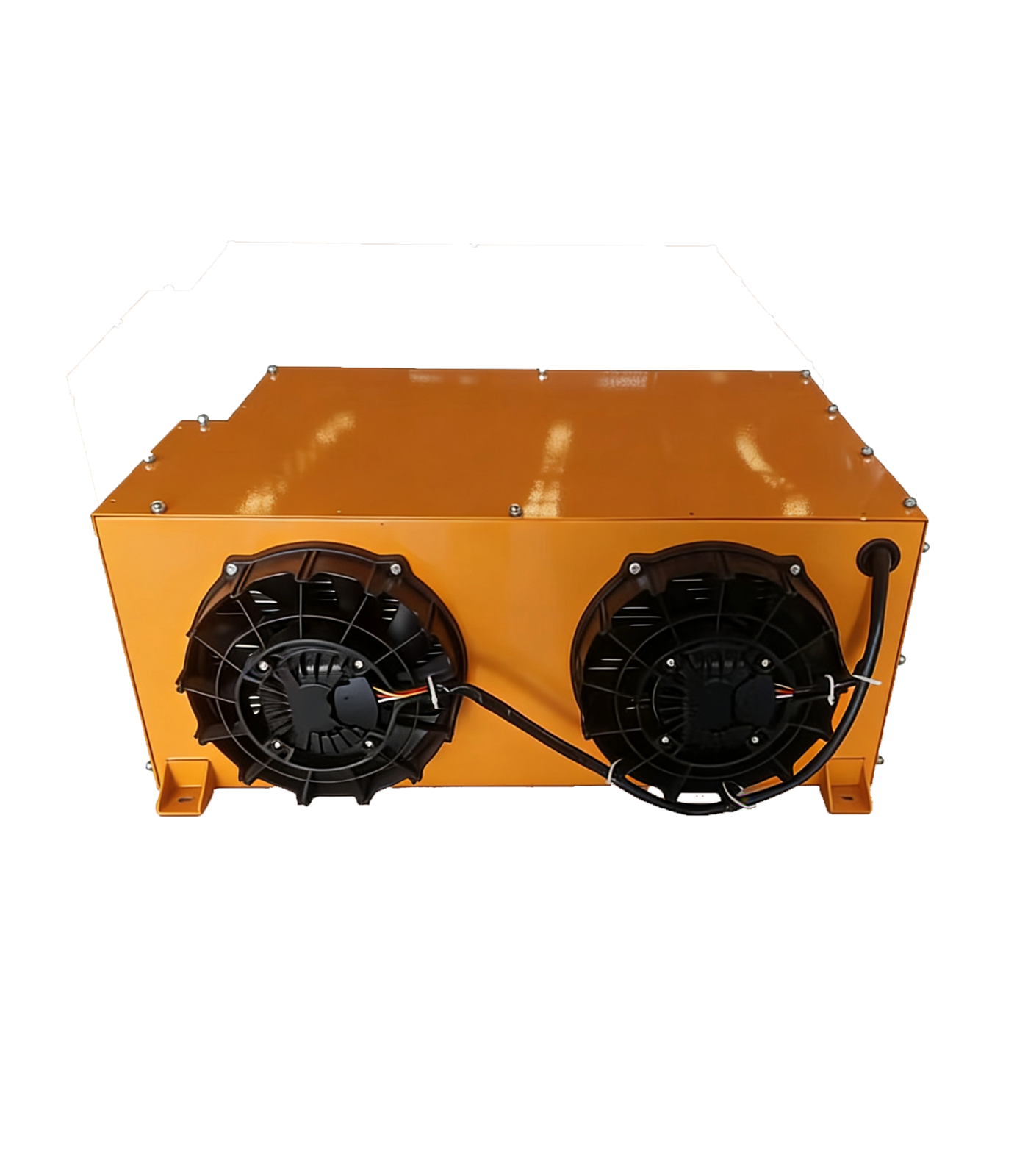
Battery thermal management is the single largest driver of commercial EV battery warranty cost over a 10-year fleet life. Get it right and warranty cost stays under 2% of pack BOM. Get it wrong and warranty cost can hit 15% — easily wiping out the margin on the entire vehicle program.
Despite that, thermal management is often the last system specified in a commercial EV procurement cycle, treated as a commodity component selected on unit price. This guide is for OEM procurement teams that want to avoid the warranty-cost trap.
The first decision: air or liquid
For any commercial EV pack above 100 kWh or operating in climates that exceed 35°C ambient, the answer is liquid. Below those thresholds, air can still work. Above them, air is a false economy.
Why: every 8°C above optimal cell temperature roughly doubles capacity fade rate. Air cooling can hold cells at +15–20°C above ambient under load. In a 35°C ambient with cells running at 50–55°C, you're at 2× capacity fade vs cells held at 30°C. Over 10 years, an air-cooled commercial pack in a hot climate will lose 35–40% capacity. A liquid-cooled equivalent will lose 10–15%.
That capacity loss translates directly to warranty cost (replacement packs) and TCO (early end-of-life).
The second decision: which kind of liquid cooling
Once you've ruled in liquid, three sub-decisions:
Cold plate or immersion?
Immersion (cells submerged in dielectric fluid) is technically superior on heat transfer but adds 15–25% to pack weight and requires fluid handling infrastructure most commercial EV platforms aren't ready for. For >95% of commercial EV applications today, cold plate liquid cooling is the right answer.
Single-zone or multi-zone flow?
For packs under 200 kWh and platforms under 1000V: single-zone is fine. For larger packs and 1500V platforms: multi-zone is required. Single-zone is cheaper but cannot maintain the cell-to-cell temperature uniformity required by modern high-voltage platforms.
Brazed or FSW cold plate joints?
For low-cycle applications (delivery vans, light EV trucks doing 1 cycle/day in mild climates): brazed is acceptable. For heavy commercial — mining, long-haul trucks, ESS — FSW is the right answer. The leak-rate difference over a 10-year life is roughly 30× in favor of FSW.
Vendor evaluation checklist
Beyond the technology choice, vendor capability matters as much as the spec. Things to verify before placing an order:
Quality system
•IATF 16949:2016 certification. Non-negotiable for vehicle-mounted parts. Check the issue date and surveillance audit history — vendors that have held it for 3+ years with zero non-conformities are very different from vendors that just got it.
•ISO 9001:2015 alone is not sufficient. ISO 9001 is a baseline; IATF 16949 has automotive-specific requirements that materially affect production consistency.
Production data
•First-pass yield rate (pre-rework). For mature cold plate production this should be >98%. Vendors quoting <95% will struggle with delivery consistency.
•Field return rate over the last 24 months. Reputable vendors will share this; suspicious vendors will deflect. Industry baseline is 0.5–1% for warranty-driven failures; best-in-class is under 0.1%.
•Production capacity vs your forecast volume. Healthy vendor capacity utilization is 60–80%. Above 90% means delivery slips when demand surges; below 50% may indicate the supplier is too small for your program.
Test capability
•In-line air-decay leak testing at 5+ bar with sub-ppm sensitivity. This is the single most predictive test for long-term cold plate reliability.
•Accelerated life test (ALT) data from independent labs (TÜV, SGS). A vendor that runs ALT in-house but won't share independent lab results has something to hide.
•100% batch traceability tied to the quality system. Required for IATF; also a strong signal of operational maturity.
Application track record
•Field data from your specific application (heavy truck, mining, bus, ESS). A vendor with 5 years of mining-truck data is materially better positioned for your mining-truck program than a vendor whose biggest reference is light passenger EVs.
•Customer references they'll let you call. Vendors that won't connect you with named customers are usually hiding something.
Lifecycle cost framework
Unit price is the wrong number to optimize. The right number is total cost of ownership over fleet life. A simple framework:
•Pack BOM cost (one-time)
•Capacity fade premium (annual, depends on cooling spec)
•Warranty failure cost (annual, depends on vendor reliability)
•Replacement pack at end-of-life (one-time, depends on capacity fade rate)
•Downtime cost during warranty events (annual, fleet-specific)
For a 10-year fleet, a pack with 20% lower BOM cost but 3× higher warranty rate and 1.5× capacity fade often has 30–50% higher TCO than a higher-spec'd alternative. The numbers don't lie if you actually do the calculation.
Red flags
Things that should make you walk away from a vendor:
•IATF 16949 certification with non-conformities in any of the last 3 audits.
•No willingness to share field return data.
•No in-line leak testing at production scale (offline sample testing only).
•Quote that's 30%+ below the cluster of competing quotes — usually means the vendor is cutting a corner you'll discover 18 months in.
•No FSW capability quoted for heavy-duty applications even when you've asked.
•Lead time quote that doesn't match published capacity data.
A note on Chinese suppliers specifically
Chinese commercial-vehicle thermal-management vendors range from world-class to opportunistic. The world-class group has typically been operating for 10+ years, exports to multiple regions, holds IATF 16949 with zero non-conformities, and shares production data freely. The opportunistic group emerged in the last 3 years, prices aggressively, and has thin field data.
The due diligence above filters between them effectively. If the vendor passes IATF + ALT + field data + reference calls, the country of origin matters less than the operational evidence.
Where Keyuan fits
Keyuan has been building battery thermal management for 17 years from our Anqiu factory in Shandong. Current state — IATF 16949:2016 certified for 5 consecutive years with zero non-conformities, 18,000 m² production floor, 42 dedicated machines including 2 FSW stations, 300,000 units/year capacity at >99.5% pre-rework yield, field return rate under 0.05%. Customers include CRRC, Shacman, Yutong, Hangcha, FAW, Heli, Linde, Jungheinrich, and others. We export to 10+ countries and hold IATF 16949, ISO 9001:2015, ISO 14001:2015, and EN 12952 (where relevant).
If you're running a commercial EV program and want to evaluate a thermal-management option that won't be the warranty-cost driver — get in touch.