The air-vs-liquid cooling question gets framed as a technology choice, but for commercial EVs it's actually a procurement-economics question. The right answer depends on cycle frequency, climate, and how seriously you take 10-year total cost of ownership.
The performance numbers
Under identical 2C fast-charge load, an air-cooled commercial EV battery pack settles into operation about 15–20°C above ambient temperature. A liquid-cooled equivalent sits 3–5°C above ambient. That sounds like a small difference until you understand how cell temperature interacts with battery life.
Lithium battery capacity fade roughly doubles for every 8°C above the optimal cell temperature window (25–35°C for most commercial chemistries). So a pack running at 50–55°C cell temperature in a 35°C ambient is degrading roughly 2× faster than one held at 30°C.
Real field data from commercial EV fleets:
•Air-cooled pack, hot climate (Saudi Arabia, India, Texas summer): 35–40% capacity loss over 10 years
•Liquid-cooled pack, same climate: 10–15% capacity loss over 10 years
•Air-cooled pack, mild climate (northern Europe, Pacific Northwest): 18–22% capacity loss
•Liquid-cooled pack, same climate: 8–12% capacity loss
The cost numbers
Air cooling is cheaper at the BOM level — typically saving $40–80 per kWh of pack capacity vs liquid cooling. For a 200 kWh truck pack, that's $8,000–16,000 in initial savings.
The TCO calculation that matters:
•Initial pack cost difference: −$10,000 (air cheaper)
•Year-3 capacity below 80% threshold (warranty replacement): air-cooled +$25,000 typical replacement cost
•Operational range loss (10% capacity = ~10% range = lost revenue): air-cooled $3,000–8,000/year
•End-of-life timing (when pack drops below 70% usable): air-cooled 6–7 years, liquid-cooled 10–12 years
•Replacement pack at end-of-life: $30,000–60,000 — air-cooled hits this 3–5 years sooner
For commercial fleets, the 10-year total cost of an air-cooled pack in hot climates is typically $40,000–80,000 higher than liquid-cooled, despite the BOM savings. In mild climates the gap narrows to $10,000–25,000 — still favoring liquid for high-utilization fleets.
When air cooling actually makes sense
Don't read this as 'always pick liquid'. Air cooling is the right answer when all of these are true:
•Pack capacity under 100 kWh
•Climate stays under 30°C ambient most of the year
•Cycle frequency is one cycle per day or less
•Operating life requirement under 5 years
•High duty-cycle thermal stress (fast charge, sustained discharge) is rare
Light delivery vans, short-route urban buses, low-utilization fleet vehicles, and warehouse forklifts in climate-controlled facilities often fit this profile. Air cooling can be appropriate.
When liquid cooling is non-negotiable
Liquid is the only safe answer when any of these are true:
•Pack capacity over 200 kWh
•Climate exceeds 35°C ambient on a regular basis
•Cycle frequency 2+ per day (typical for commercial fleets)
•Battery platform is 1500V (single-zone air cooling cannot maintain the cell-uniformity required)
•Application requires fast charging (1C+ sustained)
•10-year service life expectation
•Mining, heavy haulage, ESS, electric ferries, port equipment — all fit here
The mid-zone
The interesting cases are 100–200 kWh packs in moderate climates with 1-2 cycles per day. Here the calculation depends on:
•Local electricity costs (high cost = capacity loss hurts more)
•Vehicle utilization rate (high utilization = liquid cooling pays back faster)
•Warranty terms negotiated with the OEM
•Fleet-replacement vs purchase economics
A reasonable rule for the mid-zone: if the vehicle does over 30,000 km/year and operates above 25°C ambient for over 4 months, liquid cooling has positive 10-year ROI vs air. Below those thresholds, air is defensible.
What the spec sheet should say
If you're writing a spec for a commercial EV procurement and you've decided liquid cooling, the spec needs to specify more than 'liquid':
•Cell-to-cell ΔT under 2C fast-charge load (target: <2.5°C, hard requirement: <3.5°C)
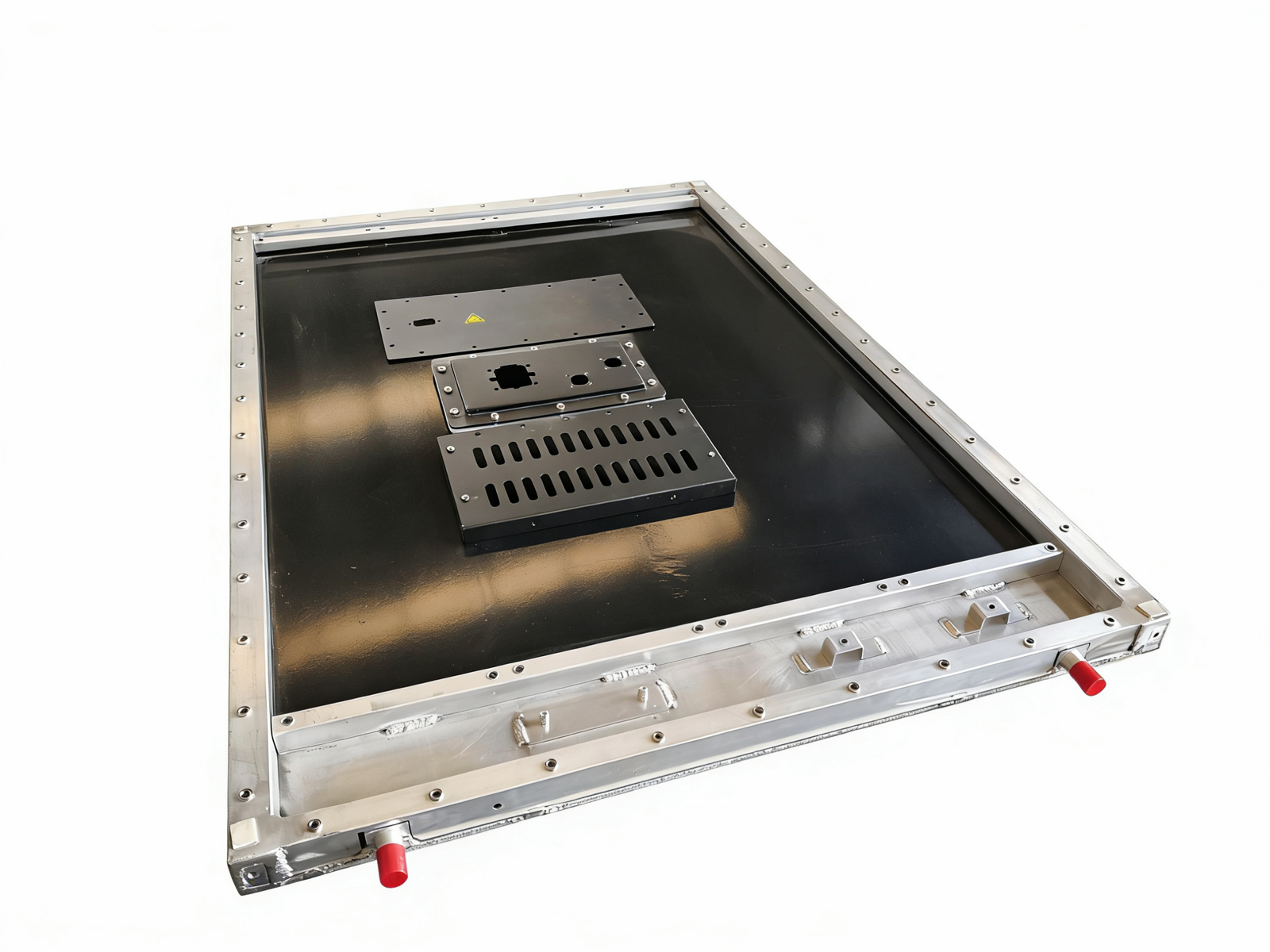
•Cold-plate joint method (FSW required for 1500V or heavy-duty cycle)
•Coolant and thermal-cycle leak rate over 10 years (target: <0.1%)
•Insulation rating (CTI 600+ for 1500V platforms)
•IATF 16949 certification on the cold-plate vendor with 3+ years zero non-conformities
Vendors that quote 'liquid cooling' without addressing these specifics are quoting Gen-1 systems against modern requirements. The warranty rate will tell the story 18 months later.
Where Keyuan fits
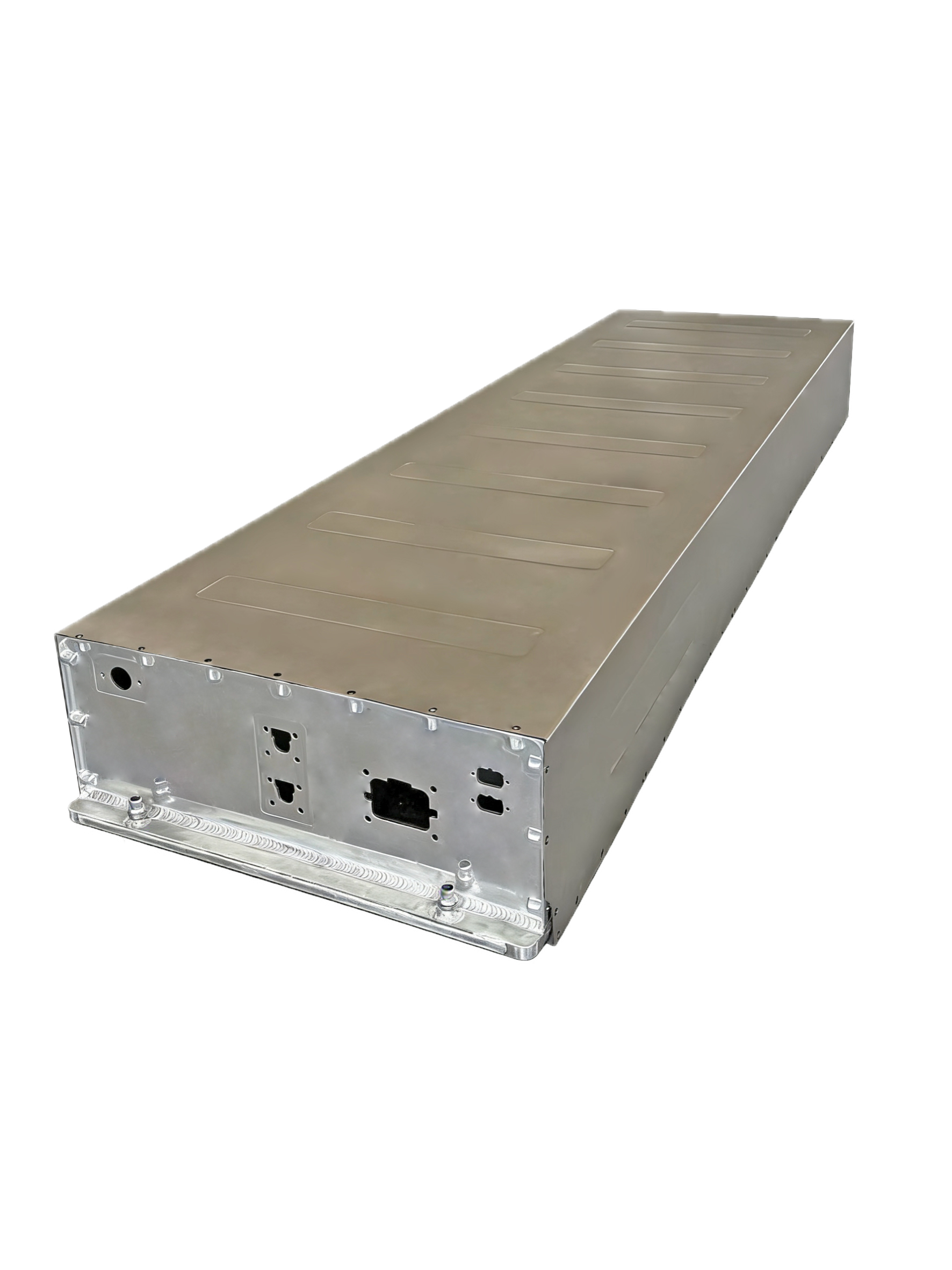
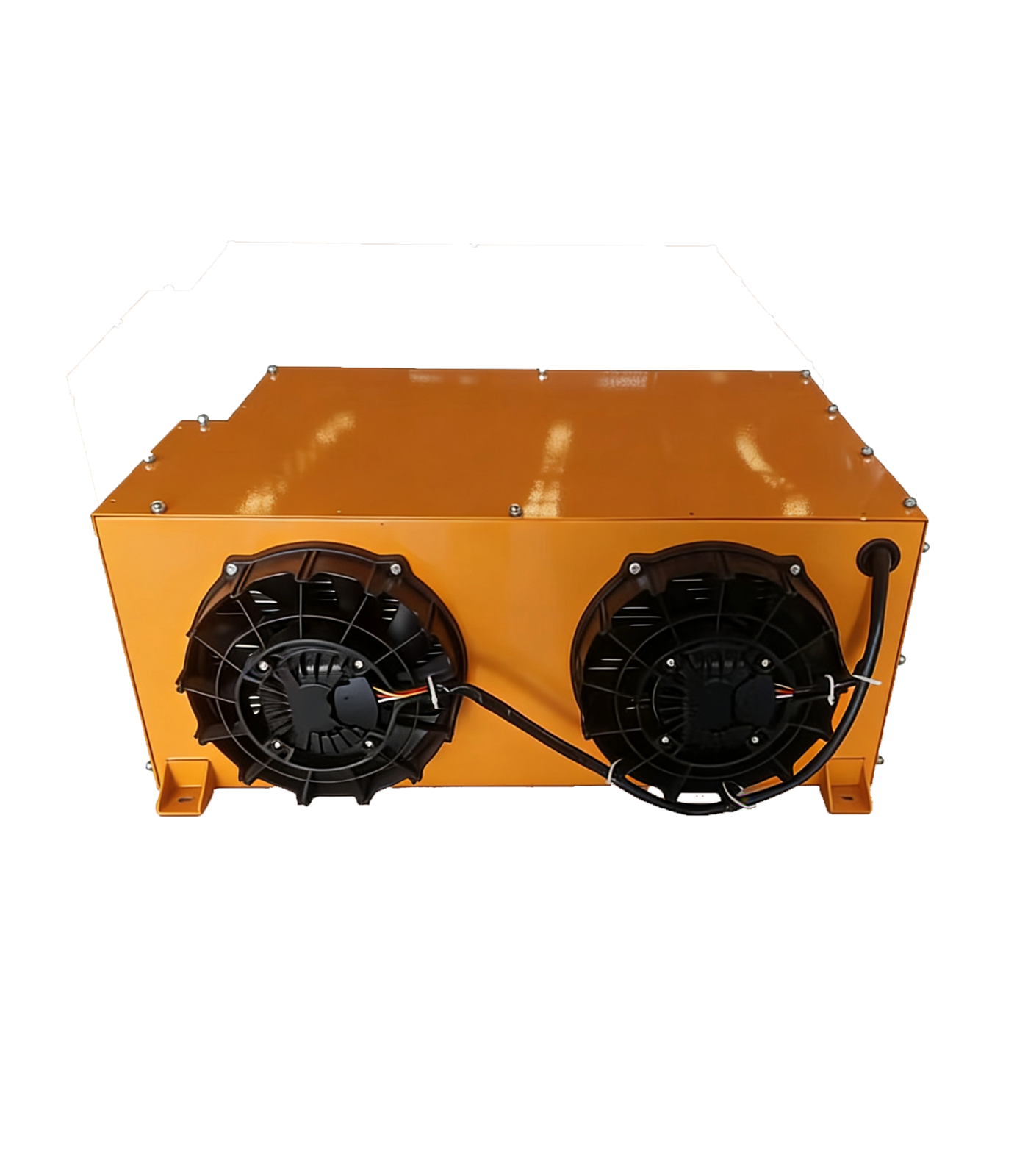
Keyuan ships both air-cooled (legacy product line) and liquid-cooled (current focus) battery enclosure platforms. We tell customers honestly when air is sufficient — the LC C-Box for light delivery, the A-Box for low-cycle mining trucks. For everything modern (heavy-duty commercial, 1500V platforms, ESS), the LC H3-Box and LCP cold plate lines are designed for the cycle frequency and TCO profile you actually face.